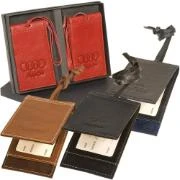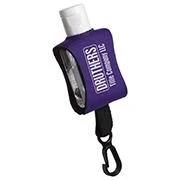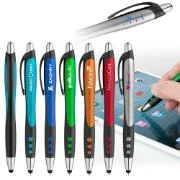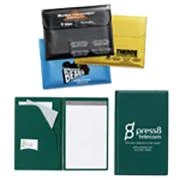




Featured Item Categories
Promotional Items by Category
I'm starting a company and need a logo. But I've never had a logo designed before. How do I go about it?
You're not alone. Hiring a logo designer is like buying a house: an pricey long-term decision that many people face for the first time. If you are interested in getting an idea of how much logos cost and how to work with graphic designers, I recommend the book: Graphic Artists Guild Handbook : Pricing & Ethical Guidelines (9th Ed), which spells out standard business practices. I recommend this book to all my clients.
How much does a logo cost?
A few hundred to a few thousand for individual or small firms, $5000-$15,000 for small to medium companies, and tens of thousands for medium to large companies. The sky's the limit for large corporations.
Do I have to spend so much?
No. Some graphically inclined people do it themselves. Many small companies don't need fancy logos, especially if they get all their clients through word of mouth. And often there are more pressing places to spend money — choosing the right name for your company is more important than what the logo looks like. Clean and legible is better than fancy and impulsive.
Why does it cost so much?
Drawing the logo itself is only a tiny part of the job. Most of the time is in research (who are your competitors, where will the logo be seen, what do you want to communicate), and in working out all the details of its application (black and white, color, web, fax, stationary, business card, forms). For large companies, the logo is part of a much larger corporate identity system, which includes a notebook of guidelines for how the logo is to be applied in ads, brochures, web sites, etc.
Why is worth spending money on logo design?
• To make a good first impression — think about dressing for a job interview.
• To make a lasting impression — so that people will recognize your organization the next time they see it.
• To differentiate yourself from your competitors. See how your competitors are presenting themselves, and decide how you want to stand out.
• To communicate what makes your organization special. Logo design the tip of the marketing and branding iceberg.
We're just a startup, we can't afford $20,000 for a logo.
New companies are often strapped for cash, so some designers will take some of their pay in stock or other arrangements. On the other hand new companies often need to look professional to investors, so a logo can be a good investment.
What makes a good logo?
• Legible. Not only must the name be easy to read and remember, it must hold up well under extreme circumstances, such as when reduced, photocopied and faxed.
• Economical. Remember that color is great, but it can be expensive to print. Logos that don't work well small or in black and white can cause headaches.
• Memorable. Usually that means simple; don't try to cram too much into a logo.
• Professional. Inspires confidence in your customers.
• Timeless. Many companies make the mistake of revamping their logo every few years with the whims of corporate politics. The most enduring logos, like IBM and ABC, are extremely simple, so they can be adapted to new situations.
How do I know I'll get something I like?
Interview several firms. Ask to see portfolios. Choose a firm that has done work similar to what you want. Don't rush. In many cases you are not just hiring a firm to do the initial logo, but also a firm that you can continue to work with as your company grows. Find a firm you trust. Often the firm will show you several ideas to choose from, but often it is important to listen their advice, since they may have a better idea of how the logo will wear over time.
How do I find a logo designer?
Open the phone book. Search the web. Ask friends who they used. Go to a local high-end art supply store and look for books that showcase work by different designers. Find logos you like and find out how designed them.
How can I prepare to work with a logo designer?
Write a single sentence that states the purpose of your company. Make a list of your competitors, and collect examples of how they present themselves in ads and stationery. Explain how you are different from your competitors. Make a list of the places you want to use your logo (stationery, business cards, brochures, ads, web sites). Collect visual examples of situations where your logo will be seen (magazines, web sites). Graphic designers tend to work visually, so visual examples are helpful in explaining what you like and don't like.
Do I need a symbol, or just the name? Should I use an abbreviation or a spelled-out name?
Only huge firms like Shell Oil or Nike are able to spend the marketing bucks to make an abstract symbol stand alone. Similarly, only big companies like CBS and MCI are able to make a set of initials meaningful. So although you may refer to your own company internally in abbreviated form, your customers will usually prefer a spelled-out name. Logos often combine a symbol and the name. But that combination can make for a complex whole, so it is often simpler to write just the name itself in a distinctive manner, or work a symbol into the name so it is not separate. In recent years I have seend a trend toward highly legible text-only logos, because it is important to be able to spell company names as web addresses.
Where do I learn more about logo design?
Here are some books I recommend:
Letterhead and Logo Design 6. Not a how to book, but an annual compendium of current examples. Good for inspiration, and seeing current trends. Keep in mind that these types of books tend to showcase flashy examples that may not be appropriate for your situation.
How to Design Logos, Symbols & Icons: 24 Internationally Renowned Studios Reveal How They Develop Trademarks for Print and New Media. By Gregory Thomas. The thinking behind logo design, especially how logos are part of branding.
Paul Rand : A Designer's Art, by Paul Rand. Lucid philosophical essays by the master who created logos for IBM, UPS, ABC. Emphasizes economy and timelessness.
Graphic Artists Guild Handbook : Pricing & Ethical Guidelines (9th Ed), which spells out standard business practices, including contracts and typical prices. I recommend this book to all my clients.
Scott Kim's background includes work in graphic design, user interface design, programming and mathematics education. My colleagues include leading puzzle designers around the world, computer puzzle game des ner s, and mathematics educators. I talk frequently at game design and mathematics education conferences. I have written two books: Inversions, and The NewMedia Puzzle Workout. I have a BA in music and a PhD in Computers and Graphic Design from


Blog
Twitter
Facebook


Click Here for marketing ideas and concepts